Eye Movement Desensitization and Reprocessing (EMDR) Therapists in Chilliwack, BC

Chris Graham
Professional Counsellor, MPCC-Provisional designation with the Canadian Professional Counsellors Association (CPCA).
I work with pilots and men in high-pressure careers who are navigating anxiety, burnout, identity challenges, or major life transitions. Many of the people I support are looking for counselling that is practical, confidential, and respectful of their professional context. For pilots concerns about career impact, medical implications often create hesitation around seeking support.

Carole Boivin M.Ed, RCC, CCC
Registered Clinical Counsellor & Certified EMDR Therapist
Hi, as an experienced Registered Counsellor (24 years) and as a Certified EMDR Therapist, I am passionate about helping others find resolution, healing & happiness in their lives. Working in both English and French, I offer individual counselling & expertise in EMDR Therapy to provide support to overcome anxiety, depression, trauma, relationship and self-esteem issues, & more. My approach has bee…

Stacey Sanderson
Registered Psychotherapist, Registered Social Worker, Subject Matter Expert
I am Subject Matter Expert in complex, relational trauma, narcissism and high conflict divorce. If you are in a toxic relationship, I can help you navigate the process while learning the powerful boundaries and strategy you need to get to the next chapter in your life feeling confident and empowered. I will help you understand the attachment patterns that are keeping you stuck.

Katharine De Santos
Registered Psychotherapist
Healthy Minds Psychotherapy was founded in 2018 with the mission of providing psychotherapeutic care to individuals from diverse backgrounds, fostering resilience in each person and our community as a whole.
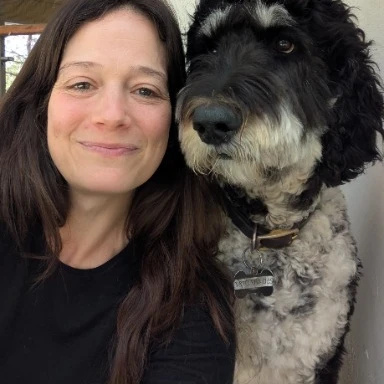
Alexandra Goodall
MA, Registered Clinical Counsellor, Somatic Psychotherapist, EMDR
Somatic. Relational. Neurobiological. I am an integrative, somatically-oriented therapist. I support clients who find themselves facing change and growth, be that in relationships, contribution/vocation, trauma recovery, intergenerational legacy, sexuality or spirituality. More at www.alexandragoodalltherapy.com and www.redkitehealing.com
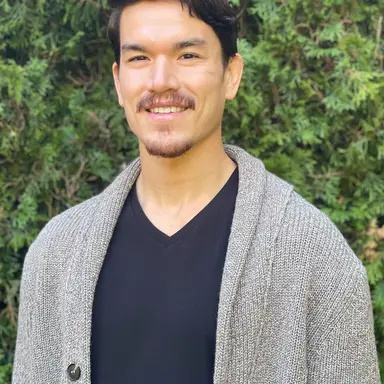
Aaron Chin
Registered Clinical Counsellor
Hi, I’m Aaron, a Registered Clinical Counsellor (RCC# 21391) practicing online, and in person for clients in Surrey, BC. I strongly believe in the power of therapy to facilitate personal growth, healing, and empowerment. My approach is rooted in empathy, respect, and collaboration, providing a safe and non-judgmental space for clients to explore their concerns.
Mohamad Shabib
Canadian Certified Counsellor
Mohamad Shabib is a trauma-informed counsellor specializing in PTSD, addiction, and complex trauma. He integrates CBT, EMDR, and evidence-based approaches with a culturally responsive lens shaped by refugee and public health experience. He supports vulnerable populations, including refugees and first responders, in healing, resilience, and recovery.

Michael Peddle
Registered Psychotherapist (RP), Canadian Certified Counsellor (CCC), Certified IFS Therapist
Since 2011, I’ve supported clients through trauma and attachment wounds using IFS as my core approach. I integrate EMDR, SFBT, and evidence-based techniques to help people heal burdens, strengthen inner safety, and reconnect with their most grounded, empowered selves.

Li Li
Registered Psychotherapist
Li offers relational psychoanalytic and trauma-informed somatic/EMDR/IFS/EFT therapy, to support individual, couples and families in communities such as immigrants, LGBTQ+, neurodivergent (ADHD), and professionals, whose experiences resonate with her own life journey the most. She holds a compassionate, culturally attuned space where clients can express freely and rediscover their authentic self.

Therapy Collective
Registered Psychologist/Counselling Therapist/Certified Counsellor
We are a group practice with psychologists, CCC's, CT's, and a therapy dog who offer counselling and formal psycho-educational assessments. We cover a broad range of presenting concerns for children, youth, families, couples, and individuals. We offer a variety of approaches as well: EMDR, Cognitive-Hypnotherapy, Art Therapy, Play-Based Therapy, Internal Family Systems, Attachment-Based, Somatic.

Alexa Gelles
Registered Clinical Counsellor
Alexa Gelles is a Registered Clinical Counsellor and the founder of Aligned Relationship Counselling. For over a decade, she has helped individuals and couples navigate relationship challenges, improve communication, and create stronger, healthier connections. Alexa is known for her warm, practical approach and her ability to help clients create meaningful, lasting change.

Molly McBride
Registered Clinical Counsellor
EMDR therapist offering online and walk and talk sessions in Chilliwack, BC
How do therapists in Chilliwack, BC compare?
Number of therapists listed
Average years in practice
Currently accepting new clients
Therapists in Chilliwack, BC who prioritize treating:
How therapists see their clients
Top therapy approaches used in Chilliwack, BC:
Frequently Asked Questions About Eye Movement Desensitization and Reprocessing (EMDR)
What is EMDR therapy?
Eye Movement Desensitization and Reprocessing (EMDR) is a structured, evidence-based therapy developed to treat trauma and PTSD. It works by having you recall distressing memories while following a therapist's guided bilateral stimulation — typically side-to-side eye movements, though taps or sounds may also be used. This process is thought to help the brain reprocess traumatic memories so they lose their emotional intensity and become integrated as ordinary past events rather than intrusive, present-tense experiences.
What conditions does EMDR treat?
EMDR has the strongest evidence base for PTSD and trauma — it is recognized by Health Canada, the World Health Organization, and the Canadian Psychological Association as an effective trauma treatment. Research also supports its use for anxiety disorders, phobias, panic disorder, depression, OCD, grief, and chronic pain with trauma components. Therapists trained in EMDR increasingly use it for a broad range of concerns beyond classic PTSD.
Do I have to talk about my trauma in detail during EMDR?
One of the significant advantages of EMDR is that it does not require you to describe traumatic events in detail. You hold the memory in mind while engaging in bilateral stimulation — you do not need to narrate it to your therapist. This makes EMDR accessible for people who find it difficult or distressing to talk about what happened, while still allowing effective processing of the traumatic material.
How many EMDR sessions are typically needed?
The number of sessions depends on the number and nature of the traumatic memories being addressed. A single-incident trauma (such as a car accident or assault) may be substantially resolved in 3–12 sessions. Complex or developmental trauma — involving multiple events over a long period — typically requires more sessions, often as part of a phased treatment plan that first builds stability and coping skills. Your therapist will assess your situation and discuss realistic timelines with you.
How is EMDR different from talk therapy?
Unlike traditional talk therapy — which focuses primarily on verbal discussion of thoughts, feelings, and experiences — EMDR works through structured bilateral stimulation to process memories stored in the nervous system. It is more body-oriented and does not rely on insight or verbal articulation as its primary mechanism of change. Many therapists integrate EMDR with talk-based approaches, using conversation for stabilization and context while using EMDR protocols for direct trauma processing.