Eating Disorders Therapists in Newfoundland and Labrador
View all cities in Newfoundland and Labrador
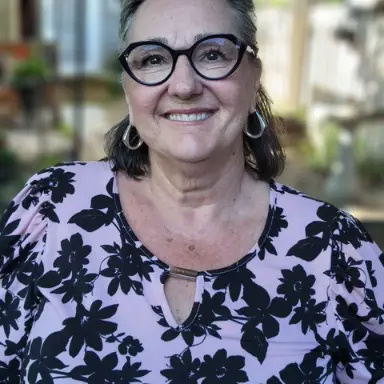
Siobhan McCarthy, MSW, RSW
Registered Individual and Family Therapist , Clinical Consultant
If you feel that you are not living your best life, your relationships are not what you hoped they would be, or the conflict in your life is not going away, perhaps it is time to talk to someone about it. Starting counselling is a brave first step and I will be there to support you through this process. Additionally, I provide supervision to Social Workers in Private Practice.

Sawah Danniels
Certified Canadian Counsellor
I'm a person-centred therapist. I offer an eclectic approach, preferring to find ways to work with who you are, how you exist in the world, and what you hope to achieve. I aim to create a cozy, comfortable and safer space for you to be yourself and get curious about what is coming up for you.
How do therapists in Newfoundland and Labrador compare?
Number of therapists listed
Average years in practice
Currently accepting new clients
Therapists in Newfoundland and Labrador who prioritize treating:
How therapists see their clients
Top therapy approaches used in Newfoundland and Labrador:
Frequently Asked Questions About Eating Disorders
What eating disorders does therapy treat?
Therapy treats the full spectrum of eating disorders, including anorexia nervosa, bulimia nervosa, binge eating disorder (the most common eating disorder), avoidant/restrictive food intake disorder (ARFID), and other specified feeding or eating disorders. These conditions are characterized by disturbances in eating behaviour, significant preoccupation with food, weight, and body shape, and often profound impacts on physical health, psychological wellbeing, and social functioning. All eating disorders are serious mental health conditions regardless of body weight.
What therapy approaches have the strongest evidence for eating disorders?
For bulimia and binge eating disorder, CBT-Enhanced (CBT-E) has the strongest evidence. Family-Based Treatment (FBT, also called the Maudsley Approach) is the gold standard for adolescents with anorexia. Dialectical Behaviour Therapy (DBT) is used when emotion dysregulation is central. The Adolescent-Focused Psychotherapy and Acceptance-Based Behaviour Therapy also have evidence. No single approach is equally effective for all eating disorders — personalized treatment planning by an eating disorder specialist is important.
When does eating disorder treatment require medical supervision?
Eating disorders can have serious medical consequences — electrolyte imbalances, cardiac arrhythmia, bone density loss, and other complications. Medical monitoring is essential when weight is very low (in anorexia), when purging is frequent (in bulimia, due to electrolyte risks), or when there are any concerning physical symptoms. Higher levels of care — intensive outpatient, day programs, or inpatient — may be needed when outpatient therapy is not sufficient to maintain medical stability or safety.
What does recovery from an eating disorder look like?
Recovery from an eating disorder is not just about normalized eating and weight — it involves a fundamental shift in one's relationship with food, body, and self. Full recovery — where the eating disorder no longer dominates one's thoughts, emotions, or behaviour — is possible, though the path is rarely linear and relapses are common parts of the journey rather than failures. Many people benefit from long-term therapy and ongoing support, particularly during high-stress periods.
How long does eating disorder treatment take?
Eating disorder treatment typically takes months to years rather than weeks. Bulimia and binge eating disorder often respond to structured CBT within 20 sessions, though many people need longer work to address underlying issues. Anorexia typically requires much longer treatment given the medical complexity and ego-syntonic nature of the condition. A team approach — therapist, dietitian, physician, and sometimes psychiatrist — produces better outcomes than therapy alone for moderate to severe eating disorders.