Integrative Therapists in Québec City, QC

Maya Awad
Registered Psychotherapist (Qualifying), MACP, ADHD-SP, HBSc (she, her)
Accepting NEW clients - Are you feeling overwhelmed or like you’re carrying a lot on your own? Feel like you're doing everything you’re “supposed to do,” but something still doesn’t feel right? Have a desire to better understand your thoughts, emotions, or patterns, work on building confidence or self-esteem, or find support for your relationship?
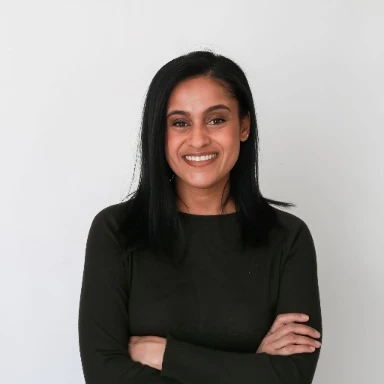
Mandeep Lalli
Registered Psychotherapist (Qualifying)
Are you feeling anxious, overwhelmed or stuck? Maybe something feels wrong? I help people navigate anxiety, depression, ADHD, trauma, and relationship struggles, with culturally sensitive care that honours your full background, including pressures others may miss. As a South Asian therapist who spent 15 years in the corporate world, I bring lived experience and real-world context to therapy.

Emma Hartley
Registered Psychotherapist (Qualifying), MACP, BA (she, her)
Are you looking for a therapist that knows what it's like to feel lost or overwhelmed and how to find your footing again? Noticing yourself feeling more anxious, "just tired", and craving a space to slow down and reconnect with a sense of meaning or purpose? Trying to make sense of shifts in mood, questioning careers, exploring relationships, parenting and identity, or a major life transition?
How do therapists in Québec City, QC compare?
Number of therapists listed
Average years in practice
Currently accepting new clients
Therapists in Québec City, QC who prioritize treating:
How therapists see their clients
Top therapy approaches used in Québec City, QC:
Frequently Asked Questions About Integrative
What is integrative therapy?
Integrative therapy is a therapeutic approach that deliberately blends theories, techniques, and perspectives from multiple therapeutic frameworks into a unified personal model. Unlike eclectic therapy (which selects techniques pragmatically) or single-model therapy (which adheres to one framework), integrative therapy seeks genuine synthesis — creating a coherent approach that draws on the best elements of different traditions in a theoretically consistent way. Most experienced therapists develop a personal integrative model over the course of their career.
What frameworks are commonly integrated in integrative therapy?
Common integrations include combining cognitive and psychodynamic approaches (to address both thoughts/behaviours and underlying relational patterns), CBT with mindfulness (as in MBCT), somatic and trauma-focused approaches with attachment theory, humanistic and CBT techniques, or relational and Gestalt elements within a broadly psychodynamic framework. Some well-known formally integrative models include Transtheoretical Therapy (Prochaska), Cognitive Analytic Therapy (CAT), and Dialectical Behaviour Therapy (which integrates CBT with acceptance and mindfulness).
Who benefits most from an integrative therapist?
Integrative therapy is particularly well-suited to people with complex, multi-layered presentations that don't fit neatly into a single diagnostic or treatment category — those who have both trauma and mood symptoms, both relationship difficulties and specific phobias, both somatic symptoms and identity questions. It is also valuable for people who have tried single-model approaches and found them insufficient, or who want a therapy that can move flexibly between depth work and practical skill-building as their needs evolve.
How do I know if a therapist's integrative approach is well-grounded?
A well-grounded integrative therapist can clearly articulate their theoretical model, explain why they blend the specific approaches they do, and describe how they decide which techniques to use for which concerns. They have solid training in the approaches they integrate (not just superficial familiarity), can name the evidence base for their methods, and are transparent about their approach with clients. Asking a potential therapist to describe their orientation and how it applies to your concerns is a reasonable and important step.
Is integrative therapy evidence-based?
Some integrative models are formally evidence-based (MBCT, DBT, CAT). Research on integrative therapy broadly is complicated by the fact that "integrative" encompasses a wide range of approaches. However, meta-analytic research consistently shows that the common factors across all therapies — the therapeutic alliance, empathy, positive regard, and a coherent treatment rationale — predict outcomes as strongly as specific techniques. A skilled, thoughtful integrative therapist supported by a sound model has every reason to expect good outcomes.