Acceptance and Commitment (ACT) Therapists in Québec City, QC

Mackenzie Fournier
Registered Psychotherapist
Hi, I’m Mackenzie! I’m a Psychotherapist who loves keeping therapy real, down-to-earth, and practical. I help people untangle patterns around anxiety, food, and self-trust using tools grounded in science. In sessions, I bring my authentic self—you can expect a mix of support, guidance, and maybe a little humour when it feels right—so we can tackle challenges together without the extra pressure.

Emma Hartley
Registered Psychotherapist (Qualifying), MACP, BA (she, her)
Are you looking for a therapist that knows what it's like to feel lost or overwhelmed and how to find your footing again? Noticing yourself feeling more anxious, "just tired", and craving a space to slow down and reconnect with a sense of meaning or purpose? Trying to make sense of shifts in mood, questioning careers, exploring relationships, parenting and identity, or a major life transition?
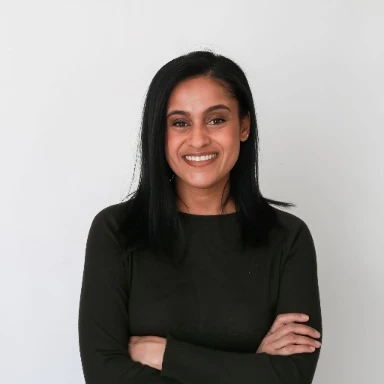
Mandeep Lalli
Registered Psychotherapist (Qualifying)
Are you feeling anxious, overwhelmed or stuck? Maybe something feels wrong? I help people navigate anxiety, depression, ADHD, trauma, and relationship struggles, with culturally sensitive care that honours your full background, including pressures others may miss. As a South Asian therapist who spent 15 years in the corporate world, I bring lived experience and real-world context to therapy.

Maya Awad
Registered Psychotherapist (Qualifying), MACP, ADHD-SP, HBSc (she, her)
Accepting NEW clients - Are you feeling overwhelmed or like you’re carrying a lot on your own? Feel like you're doing everything you’re “supposed to do,” but something still doesn’t feel right? Have a desire to better understand your thoughts, emotions, or patterns, work on building confidence or self-esteem, or find support for your relationship?

Sarah Perone
Registered Psychotherapist (Qualifying)
I help individuals and couples break painful relationship cycles so they can feel more connected, secure, and confident. I support concerns like recurrent conflict, relationship anxiety (and ROCD), limerence, and resentment. Using an attachment- and evidence-based approach, I offer warm, non-judgmental virtual therapy across Ontario. Book a free 15-minute consultation to get started.

Paris Moaf
Registered Psychotherapist, M Psy, MSc, RP
As the founder and clinical director of Paris Mind Clinic, Paris Parastoo Moaf specializes in helping clients manage and overcome depression, anxiety, PTSD, emotional disorders, grief, and relationship issues. Using CBT, DBT, MBCT, ACT, EFT, and Adlerian Therapy, Paris Parastoo Moaf tailors sessions to your unique needs.
How do therapists in Québec City, QC compare?
Number of therapists listed
Average years in practice
Currently accepting new clients
Therapists in Québec City, QC who prioritize treating:
How therapists see their clients
Top therapy approaches used in Québec City, QC:
Frequently Asked Questions About Acceptance and Commitment (ACT)
What is Acceptance and Commitment Therapy (ACT)?
ACT (pronounced as the word "act") is a modern, evidence-based form of CBT that focuses on psychological flexibility — the ability to be present with difficult thoughts and feelings without letting them dictate your behaviour, and to take action aligned with your values even in the presence of discomfort. Rather than trying to eliminate negative thoughts or feelings, ACT teaches you to change your relationship with them so they have less control over your life.
How is ACT different from traditional CBT?
Traditional CBT aims to identify and change unhelpful thoughts — replacing distorted thinking with more balanced thinking. ACT takes a different approach: rather than changing the content of your thoughts, it changes your relationship to them through defusion (learning to observe thoughts rather than being fused with them) and acceptance (making room for difficult feelings rather than fighting them). ACT also places significant emphasis on values clarification and committed action toward what matters most to you.
What conditions does ACT treat?
ACT has a strong evidence base across a wide range of conditions including anxiety, depression, OCD, chronic pain, substance use, eating disorders, PTSD, and workplace stress. It is particularly well-suited for people who have already tried to "think their way out" of mental health struggles without lasting success, and for chronic conditions where eliminating distress is not possible but improving quality of life is. ACT is also widely used for general personal growth and resilience building.
What does an ACT session involve?
ACT sessions use a combination of experiential exercises, metaphors, mindfulness practices, and values exploration. Common exercises include defusion techniques (creating distance from unhelpful thoughts, such as noticing "I'm having the thought that..."), acceptance practices (making room for difficult feelings without struggling against them), and values clarification (identifying what matters most and what you want your life to stand for). ACT is experiential rather than lecture-based — the work happens through doing, not just discussing.
How many ACT sessions are typically needed?
ACT is often delivered over 8–16 sessions for specific conditions, though it can be shorter or longer depending on the complexity of the presentation. Many people find ACT principles continue to deepen and benefit them long after formal therapy ends because the approach provides a general framework for living — not just a set of techniques for a specific problem. Between-session practice of ACT skills in daily life is an important part of the process.
