Existential Therapists in Portage la Prairie, MB
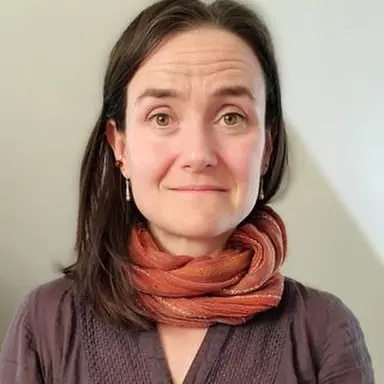
Stacy Kirkbride
Registered Psychotherapist, Recreation Therapist
I offer compassionate support for those living with chronic illness, pain, and post-injury life challenges. I specialize in helping you navigate the emotional and mental hurdles these bring. My goal is to help you reclaim your sense of self, cope with grief and loss, and rebuild your life with resilience and purpose. You're not alone--I'm here to support you every step of the way.
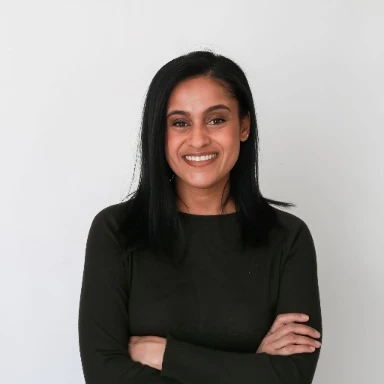
Mandeep Lalli
Registered Psychotherapist (Qualifying)
Are you feeling anxious, overwhelmed or stuck? Maybe something feels wrong? I help people navigate anxiety, depression, ADHD, trauma, and relationship struggles, with culturally sensitive care that honours your full background, including pressures others may miss. As a South Asian therapist who spent 15 years in the corporate world, I bring lived experience and real-world context to therapy.

Eleni Anagnosti
Registered Psychotherapist (Qualifying), ADHD-CCSP, MS, HBA, BA
My approach is compassionate, culturally attuned, and collaborative. I draw from CBT, strengths-based, solution-focused, and trauma-informed approaches to support ADHD, anxiety, depression, burnout, grief, life transitions, and relationship patterns. Together, we focus on building practical tools, emotional balance, and a stronger sense of self-trust.

Emma Hartley
Registered Psychotherapist (Qualifying), MACP, BA (she, her)
Are you looking for a therapist that knows what it's like to feel lost or overwhelmed and how to find your footing again? Noticing yourself feeling more anxious, "just tired", and craving a space to slow down and reconnect with a sense of meaning or purpose? Trying to make sense of shifts in mood, questioning careers, exploring relationships, parenting and identity, or a major life transition?

Maya Awad
Registered Psychotherapist (Qualifying), MACP, ADHD-SP, HBSc (she, her)
Accepting NEW clients - Are you feeling overwhelmed or like you’re carrying a lot on your own? Feel like you're doing everything you’re “supposed to do,” but something still doesn’t feel right? Have a desire to better understand your thoughts, emotions, or patterns, work on building confidence or self-esteem, or find support for your relationship?

Debra (Debbie) Airth
Registered Therapeutic Counsellor
Come as you are. Let's begin from there. I support individuals and couples navigating grief, chronic illness, trauma, identity exploration, LGBTQ+ experiences, polyamory/ENM, and life transitions. My approach is warm, trauma-informed, and rooted in genuine human connection, helping you reconnect with your strengths and move forward with greater clarity and self-compassion.

Annie Szalkai
Registered Psychotherapist
I work with adults from diverse backgrounds, supporting those navigating anxiety, stress, and self-esteem challenges. My approach is client-centred and integrative, drawing from CBT, ACT, EFIT, Solution-Focused Therapy, and more to meet each person’s unique needs.

Cayla Townes
Registered Psychotherapist
After years of working in a variety of settings with clients struggling with different life challenges, there's not much I haven't seen. My goal is for clients to walk away from therapy with me feeling validated, supported, and confident using the skills and knowledge they've learned in sessions. I look forward to learning more about how I can support you. Schedule a free consult today!

Li Li
Registered Psychotherapist
Li offers relational psychoanalytic and trauma-informed somatic/EMDR/IFS/EFT therapy, to support individual, couples and families in communities such as immigrants, LGBTQ+, neurodivergent (ADHD), and professionals, whose experiences resonate with her own life journey the most. She holds a compassionate, culturally attuned space where clients can express freely and rediscover their authentic self.
How do therapists in Portage la Prairie, MB compare?
Number of therapists listed
Average years in practice
Currently accepting new clients
Therapists in Portage la Prairie, MB who prioritize treating:
How therapists see their clients
Top therapy approaches used in Portage la Prairie, MB:
Frequently Asked Questions About Existential
What is existential therapy?
Existential therapy is a philosophical approach to psychotherapy that focuses on the fundamental concerns of human existence — freedom and responsibility, the search for meaning, the inevitability of death, and existential isolation (the unbridgeable gap between self and others). Rather than viewing psychological suffering as a symptom of disorder, existential therapy understands it as arising from the encounter with the inescapable realities of being human. The goal is not to eliminate suffering but to develop an authentic relationship with one's own existence — living with greater freedom, meaning, and responsibility.
What issues does existential therapy address?
Existential therapy is particularly suited to questions of meaning and purpose, fear of death and mortality, the experience of meaninglessness or emptiness, major life transitions, chronic illness and confronting one's finitude, grief, questions of freedom and self-determination, inauthenticity and the feeling of living according to others' expectations rather than one's own values, and existential anxiety that does not fit neatly into diagnostic categories. It complements rather than replaces other approaches for conditions like depression and anxiety.
What does an existential therapy session look like?
Existential therapy sessions are typically open-ended and dialogical — exploring the client's lived experience through genuine philosophical dialogue rather than structured techniques. The therapist engages with the client's fundamental questions about life, meaning, death, freedom, and relationship with curiosity and depth. There is no fixed protocol or technique set; the quality of the relationship and the depth of the inquiry are the primary vehicles of change. Existential therapy requires therapists with genuine philosophical grounding and personal depth.
Who are the key figures in existential therapy?
Existential therapy draws on existentialist philosophy (Sartre, Heidegger, Kierkegaard, Camus) and was developed clinically by figures including Viktor Frankl (logotherapy, focused on meaning), Irvin Yalom (four ultimate concerns: death, freedom, isolation, meaninglessness), Rollo May, and Ludwig Binswanger. Emmy van Deurzen and Ernesto Spinelli developed the British tradition of existential therapy. These approaches share a philosophical orientation but differ in emphasis and technique.
Who benefits most from existential therapy?
Existential therapy tends to resonate with people who are philosophically inclined, who are wrestling with questions of meaning and identity rather than (or in addition to) specific symptoms, and who find reductive or technique-focused approaches unsatisfying. It is particularly valuable during major life transitions (retirement, serious illness, bereavement, midlife questioning), for people who feel their suffering is a response to real existential challenges rather than a "disorder," and for those who want a therapy that engages the whole of their humanity rather than specific pathology.