Schema Therapy Therapists in Brantford, ON

Verified by Theralist
Verified and in good standing. Last verified Nov 11, 2026
Verification confirms registration only, not fit or quality of care.
How verification worksRegistered Psychotherapist (Qualifying)
Anastasia Berezowsky is a qualifying registered psychotherapist and therapist in Toronto, Ontario, seeing teens, adults and couples online or in person.

Verified by Theralist
Verified and in good standing. Last verified Nov 17, 2026
Verification confirms registration only, not fit or quality of care.
How verification worksRegistered Social Worker
Haley Moore is a registered social worker and therapist in Ontario offering online sessions for anxiety, depression and relationship issues, using CBT and DBT.
Verified by Theralist
Verified and in good standing. Last verified Nov 12, 2026
Verification confirms registration only, not fit or quality of care.
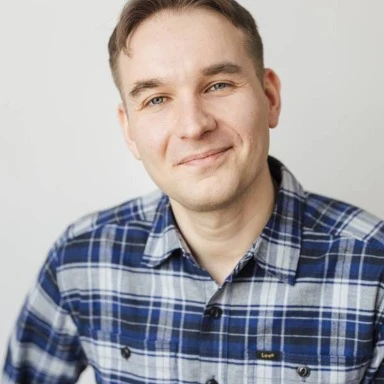
How verification worksCanadian Certified Counsellor (CCC), Registered Psychotherapist (Qualifying), Registered Counselling Therapist (Candidate)
Yaroslav Grechkin is a Canadian certified counsellor (CCC) and therapist in Ontario, seeing adults and teens online for trauma, PTSD and self-esteem.
Verified by Theralist
Verified and in good standing. Last verified Nov 11, 2026
Verification confirms registration only, not fit or quality of care.
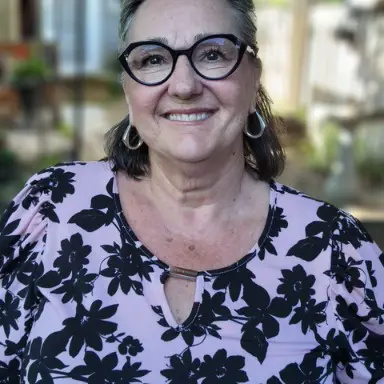
How verification worksRegistered Individual and Family Therapist , Clinical Consultant
Siobhan McCarthy is a registered individual and family therapist in Ontario, working online on eating disorders, depression and family conflict.
Verified by Theralist
Verified and in good standing. Last verified Nov 11, 2026
Verification confirms registration only, not fit or quality of care.
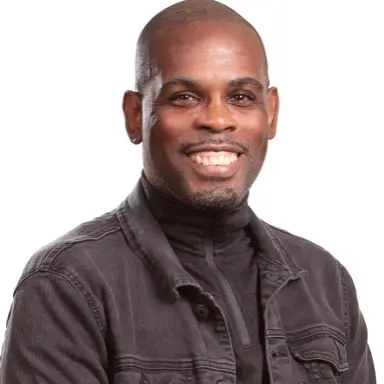
How verification worksRegistered Psychotherapist
DeRoux Jones is a registered psychotherapist and therapist in Ontario who works with adults and teens on grief, anxiety, depression and divorce.

Verified by Theralist
Verified and in good standing. Last verified Nov 8, 2026
Verification confirms registration only, not fit or quality of care.
How verification worksRegistered Psychotherapist (Qualifying)
Katherine Koplov is a registered psychotherapist (qualifying) and therapist in Mississauga, Ontario, for anxiety and relationships in English and Russian.
Verified by Theralist
Verified and in good standing. Last verified Nov 11, 2026
Verification confirms registration only, not fit or quality of care.
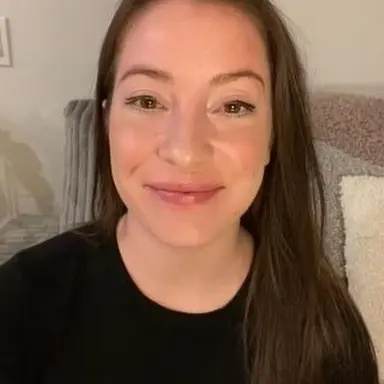
How verification worksRegistered Social Worker, Psychotherapist
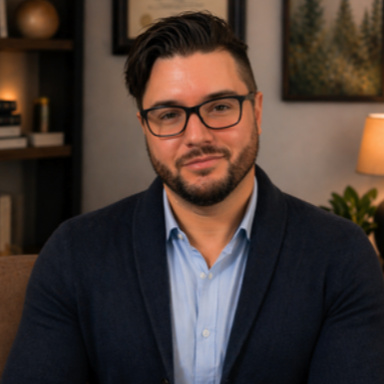
Rebecca Steele is a registered social worker and therapist in Ontario, working online with adults on anxiety, depression, OCD and relationship issues.
Verified by Theralist
Verified and in good standing. Last verified Nov 12, 2026
Verification confirms registration only, not fit or quality of care.
How verification worksRSW, MSW — Registered Social Worker, Psychotherapist
Edward Davey, RSW, MSW, is a registered social worker and psychotherapist offering online therapy in Ontario for adults with depression, anxiety or ADHD.
Registered Psychotherapist
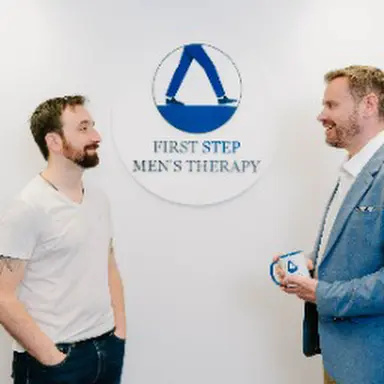
First Step Men's Therapy in Ottawa has a registered psychotherapist working with men on addiction, anger, depression and trauma using CBT and EMDR.
Verified by Theralist
Verified and in good standing. Last verified Nov 12, 2026
Verification confirms registration only, not fit or quality of care.
How verification worksClinical and Health Psychologist
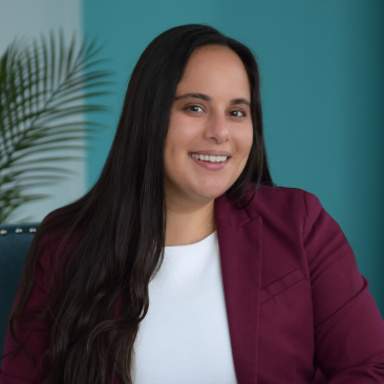
Jessica Campoli is a clinical and health psychologist and therapist in Ontario offering online CBT for adults with anxiety, depression and PTSD.

Verified by Theralist
Verified and in good standing. Last verified Nov 7, 2026
Verification confirms registration only, not fit or quality of care.
How verification worksRegistered Psychotherapist (Qualifying)
Jodi Evers is a registered psychotherapist (qualifying) and therapist in Ontario, helping teens and adults with anxiety, trauma and PTSD.
Brantford Therapists at a Glance
Number of therapists listed
Average years in practice
Currently accepting new clients
Therapists in Brantford who prioritize treating:
How therapists see their clients
Top therapy approaches used in Brantford:
Frequently Asked Questions About Schema Therapy
What is schema therapy?
Schema therapy was developed by Jeffrey Young as an extension of CBT to address personality disorders and chronic characterological problems that did not respond adequately to standard CBT. It integrates CBT, attachment theory, Gestalt experiential techniques, and object relations. A "schema" is a deeply held belief and pattern about self and world — typically developed in early childhood in response to unmet core emotional needs. Schemas such as "I am fundamentally unlovable," "I will be abandoned," or "I am defective" drive chronic psychological difficulties.
What are schema modes?
Schema modes are current emotional and coping states — the "parts" that we flip between — that are driven by underlying schemas. Common modes include Vulnerable Child (the frightened, shamed, or abandoned inner child), Angry Child, Punitive Parent (an internalized harsh critical voice), Detached Protector (emotional shutdown and distancing), and Healthy Adult (the integrated, functional part). Schema therapy focuses on identifying modes as they appear in the therapy session and in daily life, strengthening the Healthy Adult, and healing the wounded child modes.
What does schema therapy treat?
Schema therapy has the strongest evidence for borderline personality disorder (BPD) — multiple randomized trials show it produces significant and lasting improvement. It also has evidence for other personality disorders (narcissistic, avoidant), chronic depression and anxiety, eating disorders, relationship difficulties, and complex trauma. It is particularly suited to people who have not fully benefited from standard CBT, whose difficulties are deeply rooted and long-standing, and who have significant childhood adversity in their history.
What makes schema therapy different from CBT?
Standard CBT focuses on current thoughts and behaviours, typically in a structured, present-focused format. Schema therapy goes deeper — exploring the origins of schemas in childhood experiences, using experiential techniques (imagery rescripting, mode work, limited reparenting within the therapeutic relationship) to work at an emotional level, not just a cognitive one. The therapeutic relationship in schema therapy is explicitly used as a vehicle for healing early unmet needs — the therapist maintains "limited reparenting," providing warmth and care that may have been absent in childhood.
How long does schema therapy take?
Schema therapy is typically a longer-term treatment — 1–3 years of weekly sessions for personality disorders, and shorter for less complex presentations. The depth of the work — healing early childhood wounds and changing deeply entrenched patterns — takes time. Schema therapy is conducted in individual and group formats; the group format can be more economical and has its own evidence base for BPD. Both modalities produce significant, lasting change.