Sawah Danniels
Certified Canadian Counsellor
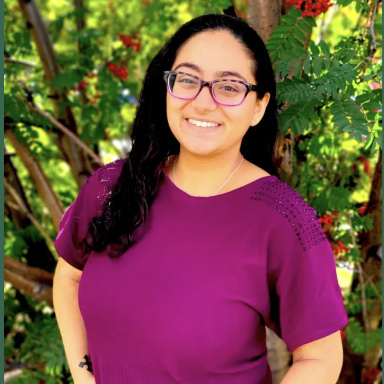
Sawah Danniels is a certified Canadian counsellor and therapist in British Columbia, working online with adults on ADHD, autism and eating disorders.
Certified Canadian Counsellor
Sawah Danniels is a certified Canadian counsellor and therapist in British Columbia, working online with adults on ADHD, autism and eating disorders.
Registered Psychotherapist
Matthew Pitts is a registered psychotherapist and online therapist in Ontario, working with couples on relationship issues, infidelity, divorce and anxiety.
Registered Provisional Psychologist
Josephine Enechukwu is a registered provisional psychologist and therapist in Calgary who works with couples and teens on anxiety and relationship issues.
Registered Provisional Psychologist
Melanie Naguib is a registered provisional psychologist and therapist in Edmonton who helps adults with grief, anxiety and depression using CBT, DBT and EMDR.
Registered Provisional Psychologist
Elizaveta Eldysheva is a registered provisional psychologist and therapist in Calgary, Alberta, supporting teens and adults with anxiety and depression.
Registered Social Worker, Clinical MSW, ADHD-CCSP
Kyle Sobey is a registered social worker and therapist in Edmonton, Alberta, working with teens and adults on ADHD, trauma and PTSD using EMDR and CBT.
Registered Psychologist
Erin Greenough is a registered psychologist and therapist in Edmonton, Alberta, offering sex therapy, couples counselling and anxiety support.
Registered Psychotherapist (Qualifying)
Mara Behan is an online therapist in Ontario and registered psychotherapist (qualifying) focused on infidelity, divorce and infertility.
Registered Provisional Psychologist
Christina Hong is a registered provisional psychologist and therapist in Calgary, Alberta, working online and in person on anxiety, grief and trauma.
Registered Psychotherapist
Annie Szalkai is a registered psychotherapist and online therapist in Ontario, helping adults with anxiety and depression using CBT and DBT.
Registered Psychotherapist (Qualifying)
Mairin Clarke is a registered psychotherapist (qualifying) and therapist in Oakville, Ontario, working with OCD, ADHD, anxiety and men's mental health.
Registered Clinical Counsellor (RCC), Psy.D, MACP, RTC
Dr. Erinn Bailey-Sawatzky is a registered clinical counsellor (RCC) and online therapist in Alberta, helping with anxiety, depression, ADHD and couples issues.
Psychiatric Nurse Practitioner, NP-PHC, ADHD-SP, MScN
Heather Wesselo is a psychiatric nurse practitioner and therapist in Alberta offering online ADHD and autism support for teens and adults.
Master Practitioner in Clinical Counselling-Provisional
Obi Ebelechukwu Ruth is an online therapist in Alberta and master practitioner in clinical counselling-provisional, supporting anxiety, trauma and addiction.
Canadian Certified Counsellor
Charmaine MacCuspic is a Canadian certified counsellor and therapist in Calgary who works with adults and families on anxiety, depression and stress.
MC, RCC, ADHD-CCSP, DCP(c)
Yuka Oshimi is a registered clinical counsellor and therapist in British Columbia who works online with adults on ADHD, autism, anxiety and depression.
Registered Psychotherapist
Chantelle Vaz is a registered psychotherapist and therapist in Mississauga, Ontario, working in person and online with anxiety, depression and ADHD.
Registered Psychologist
Coltan Thompson is a registered psychologist and therapist in Edmonton who works with 2SLGBTQI+ people on anxiety, depression and trauma, with teens and adults.
Registered Nurse (RN), Mental Health Therapist, CPMHN(C)
Emanuelito Tomas is a registered nurse and therapist in Alberta, working online with adults on anxiety, depression and suicidal thoughts using CBT and DBT.
Registered Social Worker & DBT Therapist
Mabel Reimer is a registered social worker and DBT therapist in Calgary, Alberta, working with teens, adults and families, including neurodivergent clients.
Number of therapists listed
Average years in practice
Currently accepting new clients
Therapists in Fort McMurray who prioritize treating:
How therapists see their clients
Top therapy approaches used in Fort McMurray:
Solution-Focused Brief Therapy (SFBT) is a goal-directed, future-focused approach that centres on what clients want to achieve — their preferred future — rather than exploring the causes or history of their problems. Developed by Steve de Shazer and Insoo Kim Berg, SFBT operates on the premise that clients already possess the strengths and resources needed for change, and that therapy's role is to help them identify and amplify those resources. It is deliberately brief and collaborative, with the client as the expert on their own life.
Where most therapies start by exploring the problem in detail — its history, causes, patterns, and impact — SFBT spends relatively little time on problems and much more time on exceptions (times when the problem is less present or absent), goals (what the client wants instead of the problem), and strengths (what the client is already doing that works). This shift in focus often produces movement quickly and can feel more empowering than an extended focus on what is not working.
SFBT uses a distinctive set of questions. The miracle question — "If a miracle happened tonight and your problem was solved, what would be different tomorrow?" — helps clients articulate their preferred future in concrete terms. Scaling questions ask clients to rate their current situation on a scale of 0–10 and identify what a small step forward would look like. Exception-finding questions surface times when the problem was less severe and explore what was different. Compliments and affirming clients' existing strengths are central to every session.
SFBT is well-suited for people who have a specific, well-defined goal they want to work toward, who are motivated for change, and whose difficulties do not involve deep trauma or complex psychological conditions requiring longer-term processing. It is used effectively for depression, relationship difficulties, school and workplace challenges, parenting concerns, and general life dissatisfaction. It is less appropriate as a primary approach for trauma processing, personality disorders, or grief that requires exploration of the past.
As the name suggests, SFBT is designed to be brief — often 4–8 sessions. Research supports its effectiveness even at very short treatment durations. Many clients begin to notice meaningful change within the first two to three sessions as they start identifying exceptions and small steps forward. Some therapists use SFBT as a starting point and transition to other approaches if deeper work emerges as needed; others integrate SFBT techniques within a longer-term treatment approach.