Eclectic Therapists in Courtenay, BC
Mohamad Shabib
Canadian Certified Counsellor
Mohamad Shabib is a trauma-informed counsellor specializing in PTSD, addiction, and complex trauma. He integrates CBT, EMDR, and evidence-based approaches with a culturally responsive lens shaped by refugee and public health experience. He supports vulnerable populations, including refugees and first responders, in healing, resilience, and recovery.
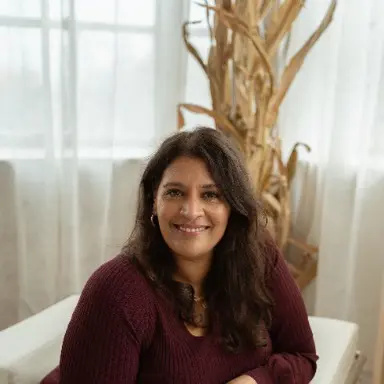
Katharine De Santos
Registered Psychotherapist
Healthy Minds Psychotherapy was founded in 2018 with the mission of providing psychotherapeutic care to individuals from diverse backgrounds, fostering resilience in each person and our community as a whole.

Yuka Oshimi
MC, RCC, ADHD-CCSP, DCP(c)
AuDHD Registered Clinical Counsellor and doctoral candidate offering neurodivergent-affirming, culturally sensitive, trauma-informed counselling for adults across BC and Canada. POC-founded practice with lived Third Culture Kid experience. Areas include but are not limited to ADHD, autism, AuDHD, anxiety, depression, and workplace and school challenges.

Sawah Danniels
Certified Canadian Counsellor
I'm a person-centred therapist. I offer an eclectic approach, preferring to find ways to work with who you are, how you exist in the world, and what you hope to achieve. I aim to create a cozy, comfortable and safer space for you to be yourself and get curious about what is coming up for you.

Li Li
Registered Psychotherapist
Li offers relational psychoanalytic and trauma-informed somatic/EMDR/IFS/EFT therapy, to support individual, couples and families in communities such as immigrants, LGBTQ+, neurodivergent (ADHD), and professionals, whose experiences resonate with her own life journey the most. She holds a compassionate, culturally attuned space where clients can express freely and rediscover their authentic self.

Debra (Debbie) Airth
Registered Therapeutic Counsellor
Come as you are. Let's begin from there. I support individuals and couples navigating grief, chronic illness, trauma, identity exploration, LGBTQ+ experiences, polyamory/ENM, and life transitions. My approach is warm, trauma-informed, and rooted in genuine human connection, helping you reconnect with your strengths and move forward with greater clarity and self-compassion.
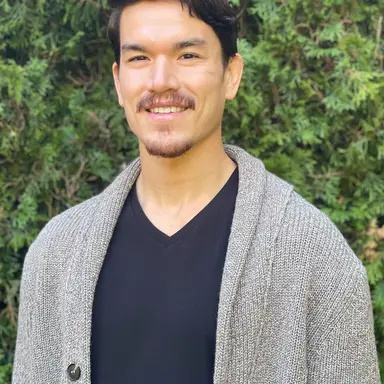
Aaron Chin
Registered Clinical Counsellor
Hi, I’m Aaron, a Registered Clinical Counsellor (RCC# 21391) practicing online, and in person for clients in Surrey, BC. I strongly believe in the power of therapy to facilitate personal growth, healing, and empowerment. My approach is rooted in empathy, respect, and collaboration, providing a safe and non-judgmental space for clients to explore their concerns.
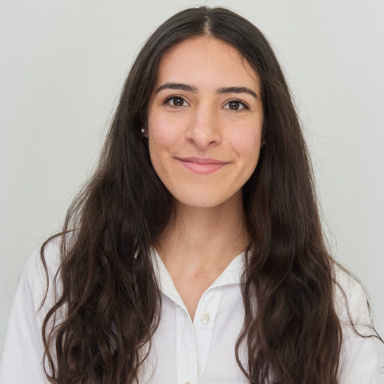
Annie Szalkai
Registered Psychotherapist
I work with adults from diverse backgrounds, supporting those navigating anxiety, stress, and self-esteem challenges. My approach is client-centred and integrative, drawing from CBT, ACT, EFIT, Solution-Focused Therapy, and more to meet each person’s unique needs.
How do therapists in Courtenay, BC compare?
Number of therapists listed
Average years in practice
Currently accepting new clients
Therapists in Courtenay, BC who prioritize treating:
How therapists see their clients
Top therapy approaches used in Courtenay, BC:
Frequently Asked Questions About Eclectic
What does "eclectic" mean when a therapist describes their approach?
When therapists describe themselves as eclectic, they mean they draw on multiple theoretical frameworks and techniques rather than adhering rigidly to a single approach. In practice, the majority of therapists work eclectically to some degree — tailoring their approach to the client's particular needs, presentation, and preferences. Eclectic therapy can mean a flexible application of techniques from different schools, or a more theoretically integrated approach in which multiple frameworks are combined into a coherent personal model.
Is eclectic therapy less rigorous than specialized approaches?
Not necessarily — it depends on the therapist. An eclectic approach used thoughtfully by a well-trained therapist who has solid grounding in multiple evidence-based methods can be highly effective, especially for complex presentations that don't respond to a single approach. A poorly applied eclectic approach — "picking techniques randomly" without theoretical coherence or clinical rationale — may be less rigorous. Research suggests that the therapeutic alliance and common factors (warmth, empathy, positive regard) are as predictive of outcomes as the specific technique.
What are the benefits of eclectic therapy?
Eclectic therapy offers flexibility — the therapist can adapt their approach as the client's needs evolve, shift between exploration-focused and skill-focused work, and draw on whichever tools best fit the current moment. For clients with complex, multi-faceted presentations, an eclectic approach often fits better than any single method. It also allows the therapist to adapt to the client's cultural background, communication style, and personal preferences in ways that a rigid adherence to protocol cannot.
How do I know if my therapist's eclectic approach is appropriate?
Ask your therapist to explain their approach and why they are using specific techniques with you. A thoughtful eclectic therapist can articulate their clinical rationale — what they are drawing on, why it fits your situation, and how they will know if it's working. If a therapist cannot explain their approach or why it is appropriate for your specific concerns, that is worth noticing. Progress monitoring — regularly checking whether you are making progress toward your goals — is also a useful tool regardless of the theoretical orientation.
What is the difference between eclectic and integrative therapy?
These terms are often used interchangeably, but there is a useful distinction. Eclectic therapy involves selecting techniques from different approaches as needed, without necessarily integrating them into a coherent theoretical framework. Integrative therapy attempts to blend theories and techniques into a unified personal model — creating a synthesis rather than a selection. Both are valid; integrative approaches tend to have a more explicit theoretical underpinning for how the elements fit together.