
Verified by Theralist
Verified and in good standing. Last verified Nov 11, 2026
Verification confirms registration only, not fit or quality of care.
How verification worksRegistered Psychotherapist
Vrushalee Nachar is a registered psychotherapist and online therapist in Ontario, working with relational trauma and couples.

Verified by Theralist
Verified and in good standing. Last verified Nov 12, 2026
Verification confirms registration only, not fit or quality of care.
How verification worksMPCC-P, RTC-C
Zarifa Andani is an MPCC-P, RTC-C therapist in British Columbia who works online with teens, adults and couples on grief, trauma and PTSD.

Verified by Theralist
Verified and in good standing. Last verified Nov 12, 2026
Verification confirms registration only, not fit or quality of care.
How verification worksCanadian Certified Counsellor (CCC), Registered Psychotherapist (Qualifying), Registered Counselling Therapist (Candidate)
Yaroslav Grechkin is a Canadian certified counsellor (CCC) and therapist in Ontario, seeing adults and teens online for trauma, PTSD and self-esteem.

Verified by Theralist
Verified and in good standing. Last verified Nov 11, 2026
Verification confirms registration only, not fit or quality of care.
How verification worksRegistered Psychologist
Aliya Manji is a registered psychologist and therapist in Calgary who works with adults and couples on anxiety, trauma and anger, using EMDR and CBT.

Verified by Theralist
Verified and in good standing. Last verified Nov 7, 2026
Verification confirms registration only, not fit or quality of care.
How verification worksRegistered Psychologist
Kevin Jones is a registered psychologist and therapist in Calgary, Alberta, offering CBT, couples therapy and trauma-focused care for adults and elders.

Verified by Theralist
Verified and in good standing. Last verified Nov 11, 2026
Verification confirms registration only, not fit or quality of care.
How verification worksRegistered Psychotherapist
Matthew Pitts, a registered psychotherapist and online therapist in Ontario, supports couples with relationship issues and adults with anxiety.
Verified by Theralist
Verified and in good standing. Last verified Nov 8, 2026
Verification confirms registration only, not fit or quality of care.
How verification worksLicensed Counselling Therapist - C
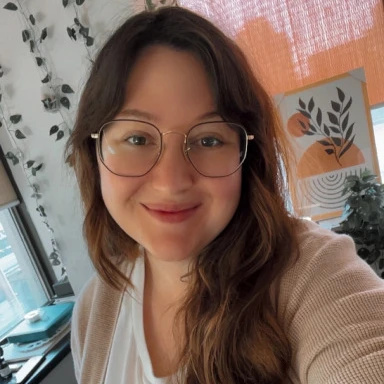
Colombe Mazerolle is a licensed counselling therapist in Moncton, New Brunswick, using DBT and EFT for emotional dysregulation and relationship issues.
Nova Scotia Therapists at a Glance
Number of therapists listed
Average years in practice
Currently accepting new clients
Therapists in Nova Scotia who prioritize treating:
How therapists see their clients
Top therapy approaches used in Nova Scotia:
Frequently Asked Questions About Couples Counselling
What is couples counselling and when should we consider it?
Couples counselling is a form of therapy where both partners work with a trained therapist to improve communication, resolve conflict, rebuild trust, and strengthen connection. It is helpful at many stages — not just in crisis. Couples often benefit from counselling when facing recurring arguments, emotional distance, major life transitions, infidelity, or simply wanting to deepen their relationship before problems develop.
What happens in a couples counselling session?
Sessions typically begin with both partners sharing their perspectives on the relationship's challenges. The therapist helps identify unhelpful communication patterns, facilitates productive dialogue, and teaches concrete skills for navigating conflict and reconnecting emotionally. Some therapists also meet with each partner individually at times to understand each person's experience more fully. Sessions are confidential and structured to give both partners a fair, balanced space.
Which therapy approaches are used in couples counselling?
The Gottman Method and Emotionally Focused Therapy (EFT) are among the most evidence-based approaches for couples, with strong research supporting their effectiveness. The Gottman Method focuses on building friendship, managing conflict, and creating shared meaning; EFT focuses on reshaping attachment patterns and deepening emotional bonds. Many therapists draw on both, as well as communication-focused CBT, depending on the couple's needs.
Can couples counselling save a relationship that is in serious trouble?
Research shows that couples therapy is effective for many couples, even those in significant distress — though outcomes depend on factors including how long problems have been present and both partners' commitment to the process. Studies on EFT show that around 70–75% of couples move from distress to recovery. Counselling can also help couples navigate a thoughtful separation when that is the best path forward.
How many couples counselling sessions will we need?
Most couples see meaningful progress within 8–20 sessions, though this varies based on the nature and duration of the issues. Some couples benefit from shorter, focused work on a specific challenge; others with more entrenched patterns or past trauma may work with a therapist over a longer period. Your therapist will discuss goals and timelines with you early in the process.