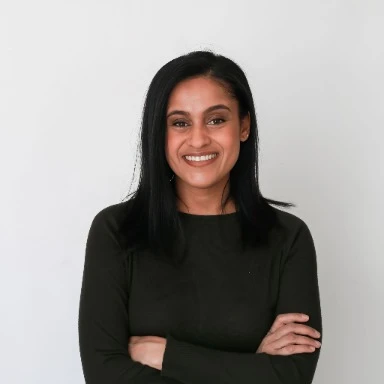
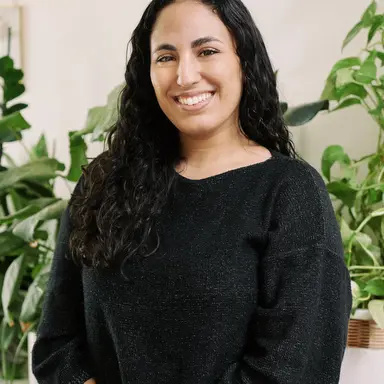
Abby Tait
Registered Psychotherapist (Qualifying)
Abby Tait is a registered psychotherapist (qualifying) and therapist in Ontario who works online with adults on grief and addiction, using ACT and DBT.
Registered Psychotherapist (Qualifying)
Abby Tait is a registered psychotherapist (qualifying) and therapist in Ontario who works online with adults on grief and addiction, using ACT and DBT.
Professional Counsellor (Candidate)
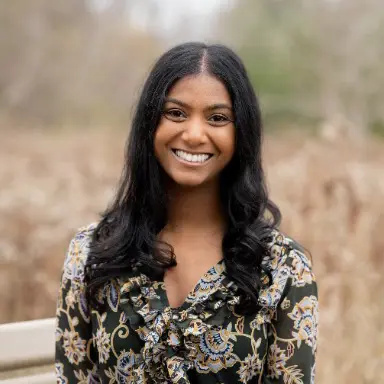
Valeria Barragan is a professional counsellor (candidate) and therapist in Ontario who works online with adults on stress and relationships.
Registered Psychotherapist (Qualifying)
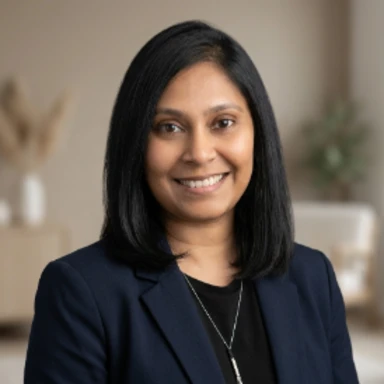
Mandeep Lalli is a registered psychotherapist (qualifying) and online therapist in Ontario, working with BIPOC adults and couples on anxiety and trauma.
Registered Psychotherapist
Varshini Skantharajah is a registered psychotherapist and therapist in Toronto helping adults with anxiety, depression and trauma, in person or online.
Registered Psychotherapist
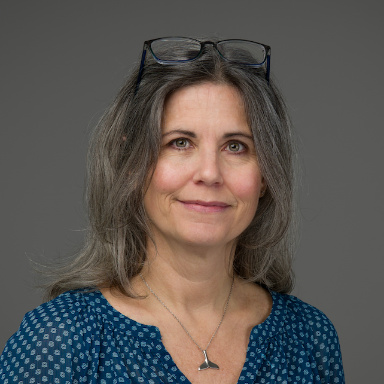
Karen Baker is a registered psychotherapist and therapist in Ontario offering online therapy for adults with anxiety, depression and codependency.
Registered Psychotherapist
Vrushalee Nachar is a registered psychotherapist and online therapist in Ontario, working with relational trauma and couples.
Registered Psychotherapist (Qualifying)
Brock Vaughan is a registered psychotherapist (qualifying) and therapist in Cambridge, Ontario, helping teens and adults with anxiety and depression.
Registered Psychotherapist
DeRoux Jones is a registered psychotherapist and therapist in Ontario who works with adults and teens on grief, anxiety, depression and divorce.
Registered Psychotherapist
Geneviève Fontaine is a registered psychotherapist and therapist in Ottawa, working with adults on anxiety and trauma, in English or French.
Registered Psychotherapist (Qualifying)
Anastasia Berezowsky is a qualifying registered psychotherapist and therapist in Toronto, Ontario, seeing teens, adults and couples online or in person.
Registered Psychotherapist, Registered Social Worker, Subject Matter Expert
Stacey Sanderson, a registered psychotherapist and therapist in Peterborough, Ontario, works with couples and families on relationship issues and anxiety.
MA, RSSW, CC-PMH
Rae Jardine is a registered social service worker and therapist in Toronto offering trauma-focused work, including with 2SLGBTQI+ clients.
Registered Psychotherapist (Qualifying)
Manisha Grewal is a registered psychotherapist (qualifying) and therapist in Ontario, seeing adults for anxiety, depression and grief through online sessions.
Registered Psychotherapist (Qualifying), Naturopath
Margot Hovey is a Montreal therapist and registered psychotherapist (qualifying) helping adults, seniors and families with anxiety and depression.
Registered Psychotherapist
Shereen Ishag is a registered psychotherapist and therapist in Burlington, Ontario, who works with couples, families and teens on anxiety and trauma.
Registered Psychotherapist
Yasmin Rombola-Bacchus is a registered psychotherapist and therapist in Toronto, Ontario, working with children, teens and adults on trauma and anxiety.
Registered Psychotherapist
Maya Dousti is a registered psychotherapist and therapist in Ontario who works online with teens and adults on anxiety and trauma.
Registered Nurse Psychotherapist, Certified Nurse Psychotherapist
Connie Coda is a registered nurse psychotherapist and therapist in Thunder Bay, Ontario, offering online sessions for anxiety and chronic illness.
EMDR Therapist
Delia Bagi is an EMDR therapist in Ontario, working online with teen and adult clients on trauma, anxiety and depression.
Registered Psychotherapist
Li Li is a registered psychotherapist and therapist in Toronto, Ontario, helping adults with trauma, anxiety, depression and ADHD through EMDR and EFT.
Number of therapists listed
Average years in practice
Currently accepting new clients
Therapists in North Bay who prioritize treating:
How therapists see their clients
Top therapy approaches used in North Bay:
Integrative therapy is a therapeutic approach that deliberately blends theories, techniques, and perspectives from multiple therapeutic frameworks into a unified personal model. Unlike eclectic therapy (which selects techniques pragmatically) or single-model therapy (which adheres to one framework), integrative therapy seeks genuine synthesis — creating a coherent approach that draws on the best elements of different traditions in a theoretically consistent way. Most experienced therapists develop a personal integrative model over the course of their career.
Common integrations include combining cognitive and psychodynamic approaches (to address both thoughts/behaviours and underlying relational patterns), CBT with mindfulness (as in MBCT), somatic and trauma-focused approaches with attachment theory, humanistic and CBT techniques, or relational and Gestalt elements within a broadly psychodynamic framework. Some well-known formally integrative models include Transtheoretical Therapy (Prochaska), Cognitive Analytic Therapy (CAT), and Dialectical Behaviour Therapy (which integrates CBT with acceptance and mindfulness).
Integrative therapy is particularly well-suited to people with complex, multi-layered presentations that don't fit neatly into a single diagnostic or treatment category — those who have both trauma and mood symptoms, both relationship difficulties and specific phobias, both somatic symptoms and identity questions. It is also valuable for people who have tried single-model approaches and found them insufficient, or who want a therapy that can move flexibly between depth work and practical skill-building as their needs evolve.
A well-grounded integrative therapist can clearly articulate their theoretical model, explain why they blend the specific approaches they do, and describe how they decide which techniques to use for which concerns. They have solid training in the approaches they integrate (not just superficial familiarity), can name the evidence base for their methods, and are transparent about their approach with clients. Asking a potential therapist to describe their orientation and how it applies to your concerns is a reasonable and important step.
Some integrative models are formally evidence-based (MBCT, DBT, CAT). Research on integrative therapy broadly is complicated by the fact that "integrative" encompasses a wide range of approaches. However, meta-analytic research consistently shows that the common factors across all therapies — the therapeutic alliance, empathy, positive regard, and a coherent treatment rationale — predict outcomes as strongly as specific techniques. A skilled, thoughtful integrative therapist supported by a sound model has every reason to expect good outcomes.