Expressive Arts Therapists in Alberta
View all cities in Alberta
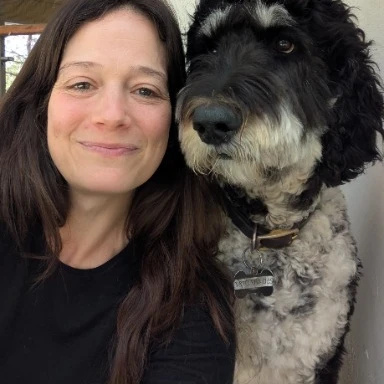
Alexandra Goodall
MA, Registered Clinical Counsellor, Somatic Psychotherapist, EMDR
Somatic. Relational. Neurobiological. I am an integrative, somatically-oriented therapist. I support clients who find themselves facing change and growth, be that in relationships, contribution/vocation, trauma recovery, intergenerational legacy, sexuality or spirituality. More at www.alexandragoodalltherapy.com and www.redkitehealing.com

Meg Lindemulder
Canadian Certified Counsellor, Counselling Therapist
Life can be a beautiful mess and a heartbreaking gift, often at the same time. When you're not sure how to navigate the challenges you're currently facing, my aim is to provide the connection and support you need to heal, grow, and thrive. My areas of specialty are Religious & Spiritual Trauma, Late-Diagnosis ADHD, Grief & Loss, Attachment Issues, and Parenting Support.
Revolution Therapy & Wellness
Trauma-Informed, Identity-Affirming Therapy & Wellness Collective in Calgary
Revolution Therapy & Wellness is a multidisciplinary trauma-informed therapy and wellness collective in Calgary, Alberta. We offer individual, relational, somatic, and sex-positive care for queer, trans, neurodivergent, polyamorous, kink-affirming, BIPOC, and marginalized communities — both in-person and virtual.
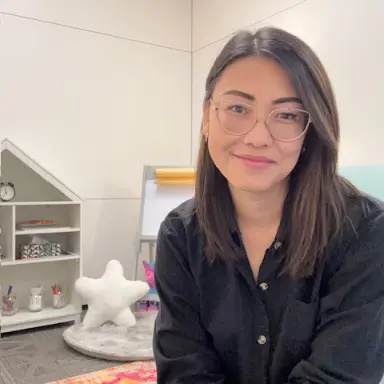
Claire Fan
Therapist (MSW/RSW)
I am Claire, a Mental Health Therapist in NW Calgary. I hold a Bachelor in Community Rehabilitation and Disability Studies, and I am a Registered Social Worker with a Masters in Social Work (Clinical Specialization) from the University of Calgary. I am in good standing with Alberta College of Social Workers and I am authorized to perform Restricted Psychosocial Interventions.

Zarifa Andani
MPCC-P, RTC-C
This work isn’t about fixing your parts—it’s about helping you feel more like your whole self again. We can work together to slow down, get curious, and listen deeply. Our internal body wisdom is an integral source of information that speaks more significantly than words. Real change is possible when ALL of you feels safe enough to be seen and supported, just as you are.

Mikaela Pahulje
Registered Provisional Psychologist
I offer in person and virtual services.
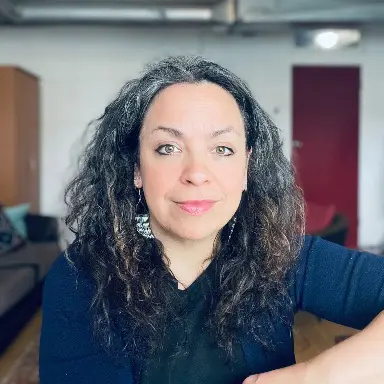
Maiya Robbie
Registered Therapeutic Counsellor, Registered Expressive Arts Therapist
My approach is compassionate, curious, resourcing, arts-based and informed by my particular constellation of interests and experiences in the field of psychotherapy. I'm dedicated to helping folks navigate liminal (in-between) spaces of not knowing. Sometimes this looks like stuck-ness, or feeling at a standstill... experiencing grief, overwhelm, depression or anxiety. I'm here to help.
How do therapists in Alberta compare?
Number of therapists listed
Average years in practice
Currently accepting new clients
Therapists in Alberta who prioritize treating:
How therapists see their clients
Top therapy approaches used in Alberta:
Frequently Asked Questions About Expressive Arts
What is expressive arts therapy?
Expressive arts therapy (ExAT) integrates multiple art forms — visual art, music, movement, drama, creative writing, and poetry — within a therapeutic relationship. Unlike specialized modality therapies (art therapy, music therapy), expressive arts therapy uses the interplay between different art forms rather than mastery of one. Developed by Paolo Knill and colleagues in the 1970s, it is grounded in the belief that creative expression is central to human experience and that moving fluidly between different expressive modes opens pathways of healing not available through verbal language alone.
Who benefits from expressive arts therapy?
Expressive arts therapy benefits people across all ages and backgrounds — it is used with children, adolescents, adults, and elders in diverse settings. It is particularly valuable for trauma survivors (for whom trauma is often stored in non-verbal, sensory, and image-based form), people with communication challenges, those who find talk therapy insufficient or inaccessible, individuals navigating grief and loss, and people who identify as creative and respond naturally to artistic expression as a mode of self-exploration and healing.
Do I need to be artistic or creative to do expressive arts therapy?
No — and this is a common misunderstanding. Expressive arts therapy is not about producing good art or having artistic skill. It is about engaging in creative process as a mode of self-expression, exploration, and connection. The therapist is not evaluating quality; they are present with the process and with what emerges from it. People who identify as "not creative" often find expressive arts therapy surprisingly accessible once they set aside the idea that their creations need to be "good."
What does an expressive arts therapy session look like?
Sessions vary widely depending on the therapist and client. A session might begin with movement or breathing, move into visual art-making (drawing, painting, clay), then shift to writing or poetry, and close with verbal reflection on what emerged across the different media. The therapist witnesses and holds the creative process, offers invitations rather than directives, and helps the client make meaning from what arises. Sessions can be individual or group.
How do I find an expressive arts therapist in Canada?
Expressive arts therapists in Canada may be registered through the Canadian Expressive Arts Therapy Association (CEATA). The field overlaps with art therapy, drama therapy, music therapy, and dance/movement therapy — many practitioners integrate expressive arts approaches within their broader therapeutic practice. Theralist lists therapists who offer expressive arts therapy in their practice; searching for this specialty will help identify available practitioners in your area.