Peer Relationships Therapists in Cambridge, ON

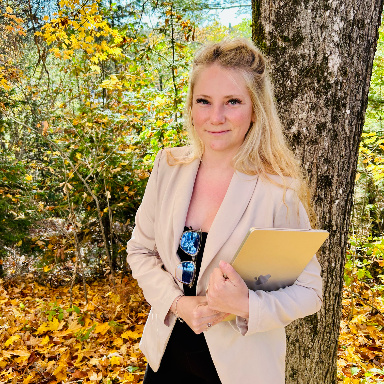
Allison Clayton

Registered Psychotherapist

Accepting new clients Virtual

Allison Clayton is a registered psychotherapist and art therapist in Barrie and Collingwood, Ontario, working with teens and adults on anxiety and trauma.

Elliott McLarnon

Registered Psychotherapist

Accepting new clients Virtual

Elliott McLarnon is a registered psychotherapist and online therapist in Toronto, Ontario, working with adults on anxiety, depression, grief and stress.

Natascha Piciga

Registered Psychotherapist

Accepting new clients Virtual

Natascha Piciga is a registered psychotherapist and online therapist in Ontario working with teens and families on anxiety, ADHD and depression.

Brock Vaughan

Registered Psychotherapist (Qualifying)

Accepting new clients Virtual In-Person

Brock Vaughan is a registered psychotherapist (qualifying) and therapist in Cambridge, Ontario, helping teens and adults with anxiety and depression.

Ariel Dasrath

Registered Psychotherapist

Accepting new clients Virtual

Ariel Dasrath is a registered psychotherapist and online therapist in Ontario for teens and adults on family conflict and peer relationships.

Audrey Kao

Registered Social Worker

Accepting new clients Virtual

Audrey Kao is a registered social worker and therapist in Toronto helping adults with anxiety and relationship issues, using attachment theory.

Teodora Kostadinovska

Registered Psychotherapist (Qualifying)

Accepting new clients Virtual

Teodora Kostadinovska, a registered psychotherapist (qualifying) and therapist in Kitchener, Ontario, works with couples and teens on anxiety.

Sophie Cohen

Registered Psychotherapist (Qualifying)

Accepting new clients Virtual

Sophie Cohen is a registered psychotherapist (qualifying) and therapist in Ontario offering online sessions for anxiety, depression and stress.

Dylan Walker

Registered Psychotherapist (Qualifying)

Accepting new clients Virtual

Dylan Walker, a registered psychotherapist (qualifying) and therapist in Ontario, uses online CBT and ACT with adults dealing with anxiety.

Emma Krisko

Registered Psychotherapist

Accepting new clients Virtual

Emma Krisko is a registered psychotherapist and therapist in Ontario who works online with couples and adults on relationship issues, sex therapy and ADHD.

Mikyla Balicki

Registered Psychotherapist (Qualifying)

Accepting new clients Virtual

Mikyla Balicki is a qualifying registered psychotherapist and therapist in St. Catharines, Ontario, helping teens and adults with anxiety and ADHD.

Regina Yakubov

Registered Psychotherapist

Accepting new clients Virtual

Regina Yakubov is a registered psychotherapist and therapist in Ontario offering online sessions for anxiety and depression, in English or Russian.

Harleen Gill

Registered Psychotherapist (Qualifying)

Accepting new clients Virtual

Harleen Gill is a registered psychotherapist (qualifying) and therapist in Ontario offering online help with anxiety, depression and stress.

Cambridge Therapists at a Glance

Number of therapists listed

13

Average years in practice

3.8 Years

Currently accepting new clients

100 %

Therapists in Cambridge who prioritize treating:

100% Peer Relationships
85% Anxiety
69% Self Esteem
54% Depression
38% Relationship Issues
38% Stress
31% Emotional Dysregulation
31% Coping Skills

How therapists see their clients

8% In Person & Online
92% Online Only

Top therapy approaches used in Cambridge:

62% Cognitive Behavioural (CBT)
54% Person-Centered
46% Strength-Based
46% Dialectical Behaviour (DBT)
38% Solution Focused Brief (SFBT)
38% Emotionally Focused Therapy (EFT)
38% Acceptance and Commitment (ACT)
31% Mindfulness-Based (MBCT)

Frequently Asked Questions About Peer Relationships

What peer relationship difficulties does therapy address?

Therapy for peer relationship difficulties addresses a wide range of challenges: social anxiety that prevents connection, loneliness and isolation, difficulty reading social cues, conflict with friends or colleagues, bullying and its aftermath, social rejection, difficulty maintaining friendships over time, fear of judgment or exclusion, and the impact of autism, ADHD, or anxiety on social functioning. For children and adolescents, peer relationships are central to development and wellbeing; for adults, loneliness is increasingly recognized as a serious public health concern.

What causes difficulties with peer relationships?

Peer relationship difficulties often stem from a combination of factors: social anxiety (fear of negative evaluation or rejection), neurodevelopmental differences such as autism or ADHD that affect social processing, early attachment experiences that shape expectations in relationships, social skill gaps, low self-esteem or shame, depression or withdrawal, and the lasting effects of bullying or social trauma. Understanding which factors are most relevant for you is the first step in finding the right therapeutic approach.

What therapy approaches help with peer relationship difficulties?

CBT for social anxiety reduces the fear and avoidance that prevents connection. Social skills training — either individually or in group format — builds practical competencies in initiating, sustaining, and repairing relationships. Interpersonal therapy (IPT) specifically addresses relationship patterns and transitions. For autistic individuals or those with ADHD, therapists often combine social skills work with education about how neurodevelopmental differences affect social communication. Group therapy offers a uniquely valuable laboratory for practising social skills in a supported setting.

Can therapy help adults who struggle with loneliness or making friends?

Yes — adult loneliness and difficulty maintaining friendships are valid and increasingly common concerns. Therapy helps adults understand the patterns and beliefs that interfere with connection — including fears of vulnerability, perfectionism in relationships, mistrust from past hurt, or anxiety about being "too much" or "not enough." It also provides practical support for initiating and deepening relationships. The therapeutic relationship itself can be a place where clients experience a safe, boundaried connection and learn from it.

How long does therapy for peer relationship difficulties typically take?

Timeline varies considerably depending on the underlying cause. Social anxiety that is relatively uncomplicated may improve meaningfully in 12–16 sessions of CBT. Deeper patterns rooted in attachment wounds or trauma, or social difficulties connected to neurodevelopmental differences, generally benefit from longer-term work. Group therapy formats provide the social environment itself as a therapeutic tool, and are often run over 8–12 weeks. Many people engage in both individual and group therapy simultaneously for the best outcomes.

Filters

Specialities
Modalities
Session Types
Client Focus
Client Ages
Gender
Languages
Religions
Specific Populations
Availability
Price

Individual session

Any price

Couples / Partners session

Any price

Sliding Scale

Only therapists offering reduced rates