Karina Ramdath (she/her)
Registered Social Worker, Psychotherapist
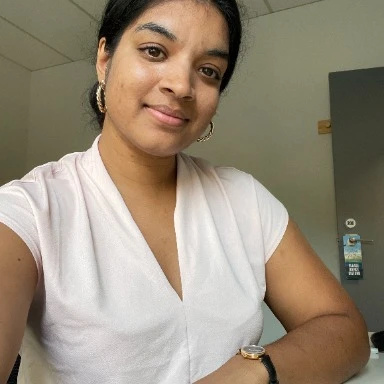
Karina Ramdath is a registered social worker, psychotherapist and online therapist in Alberta, working with trauma, grief and eating disorders using CBT.
Registered Social Worker, Psychotherapist
Karina Ramdath is a registered social worker, psychotherapist and online therapist in Alberta, working with trauma, grief and eating disorders using CBT.
Registered Psychotherapist, Canadian Certified Counsellor (CCC)
Lylla Goheen is a registered psychotherapist and therapist in Etobicoke, offering couples therapy, sex therapy and anxiety support, in person or online.
Registered Psychotherapist (Qualifying)
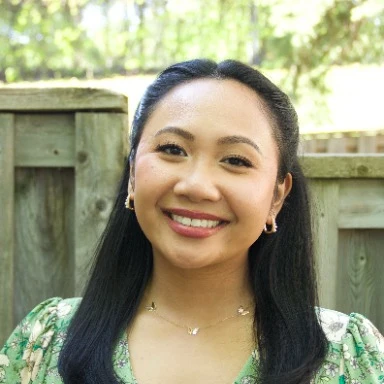
Arianne Nicole Palmares is a registered psychotherapist (qualifying) and therapist in Vaughan, Ontario, working with Filipino clients in English or Tagalog.
Registered Social Worker & DBT Therapist
Mabel Reimer is a registered social worker and DBT therapist in Calgary, Alberta, working with teens, adults and families, including neurodivergent clients.
Registered Psychotherapist (Qualifying)
Tina Pirvali is a registered psychotherapist (qualifying) in Ontario offering online couples therapy and therapy for infidelity in English and Farsi.
Registered Psychotherapist (Qualifying)
Abby Tait, a registered psychotherapist (qualifying) and online therapist in British Columbia, works with adults on grief, caregiver burnout and anxiety.
Registered Psychotherapist
Yuhao Miao is a registered psychotherapist and therapist in Ontario who works with adults on anxiety, ADHD and depression, in English and Mandarin.
Registered Psychotherapist, Recreation Therapist
Stacy Kirkbride is an Ontario registered psychotherapist and recreation therapist offering online therapy for chronic illness, chronic pain and anxiety.
Registered Psychotherapist
Keren Mann is a registered psychotherapist and therapist in Mississauga, Ontario, working with anxiety, depression, trauma and PTSD for adults and teens.
Registered Psychotherapist (Qualifying), MACP, EMDR, ADHD-CCSP, BA
Erin Ibrahim is a registered psychotherapist (qualifying) and online therapist in Ontario, helping teens, adults and couples with anxiety, trauma and ADHD.
Registered Psychotherapist
Cassandra Tennriello, a registered psychotherapist and online therapist in Ontario, works with anxiety, trauma, PTSD and codependency using CBT and DBT.
Registered Psychotherapist
Chantelle Vaz is a registered psychotherapist and therapist in Mississauga, Ontario, working in person and online with anxiety, depression and ADHD.
Registered Social Worker, Mental Health Therapist, Clinical Educator
Teak Daniel is a registered social worker and therapist in British Columbia, specializing in bipolar disorder, depression and anxiety.
Registered Psychotherapist
Feel Your Way Therapy is a registered psychotherapist and therapist in Toronto for anxiety, trauma, ADHD and relationship issues, using EFT and EMDR.
Registered Psychotherapist (RP)
Shelley Sayle-Udall is a registered psychotherapist (RP) and therapist in Ontario offering online support for trauma, anxiety, grief and family conflict.
Registered Psychotherapist
Natascha Piciga is a registered psychotherapist and online therapist in Ontario working with teens and families on anxiety, ADHD and depression.
MA, RSSW, CC-PMH
Rae Jardine is a registered social service worker and therapist in Toronto offering trauma-focused work, including with 2SLGBTQI+ clients.
Registered Psychotherapist (Qualifying)
Brock Vaughan is a registered psychotherapist (qualifying) and therapist in Cambridge, Ontario, helping teens and adults with anxiety and depression.
Registered Social Worker
Haley Moore is a registered social worker and therapist in Ontario offering online sessions for anxiety, depression and relationship issues, using CBT and DBT.
Registered Provisional Psychologist
Christina Hong is a registered provisional psychologist and therapist in Calgary, Alberta, working online and in person on anxiety, grief and trauma.
Number of therapists listed
Average years in practice
Currently accepting new clients
Therapists in Cambridge who prioritize treating:
How therapists see their clients
Top therapy approaches used in Cambridge:
Narrative therapy, developed by Michael White and David Epston, is based on the idea that people understand their lives through stories — and that the stories we tell about ourselves profoundly shape our identity, our possibilities, and our wellbeing. When life stories become dominated by problems, loss, and negative self-description ("I am depressed," "I am a failure"), narrative therapy helps people examine those stories, notice their limits, and begin writing richer, more empowering accounts of who they are. The approach is deeply respectful of the person and explicitly attentive to social and political context.
Externalizing is one of narrative therapy's core practices: it separates the problem from the person. Rather than "I am anxious," narrative therapy might speak of "Anxiety" as something that visits you, has an influence on you, and that you have a relationship with — rather than something you are. This linguistic shift creates space to examine how the problem operates, when it has more and less influence, and what your preferences are in relation to it. Externalizing is particularly helpful with children, who respond well to the idea that "the problem is the problem, not the person."
Narrative therapy is used for depression, anxiety, trauma, grief, eating difficulties, relationship concerns, and identity questions. It is particularly well-suited for work with people whose identities have been shaped by marginalization — Indigenous clients, racialized individuals, people with disabilities, LGBTQ2S+ people — because it explicitly names the social and cultural forces that produce problem-saturated stories and refuses to locate problems solely inside individuals. It is often used with families and groups, not just individuals.
Narrative therapists ask curious, open questions that explore the influence of the problem, the history of your relationship with it, and the moments when things were different — "unique outcomes" or "sparkling moments" that contradict the dominant problem story. They help you identify values and commitments that have guided you, and use these as material for constructing an alternative, preferred story of your identity. Narrative therapists sometimes write therapeutic letters summarizing these discoveries, which clients report as among the most meaningful elements of the process.
Narrative therapy does not have a fixed session model — it adapts to the person and the presenting concerns. Some people find clarity in a handful of sessions; others engage in longer-term narrative work, particularly when identity reconstruction after trauma or marginalization is central. Narrative therapy can also be used in a single consultation format. Many therapists integrate narrative practices within a broader repertoire rather than as a standalone approach, drawing on the powerful practices of externalization and re-authoring when they are most applicable.